
Common
Facility Servics
CFS provides SMEs and enterprises access to shared technology, equipment, and specialized processes used in targeted industries. The service enables value addition, capability upgrading, and improved output quality through structured delivery, scheduling, and defined procedures. Services may be provided on nominal charges where applicable.
Program Structure and Levels
Programs are offered across levels to support entry pathways, upskilling, and sector specialization. Program level, duration, and eligibility vary by trade and centre capability.
Short Skills Programs
Designed for job-entry and basic trade competence.
Technical Certification Programs
Designed for deeper applied competence and specialized role readiness.
Diploma-Level Pathways
Designed for advanced technical capability and progression into specialized roles.

Tools, Die & Mold Making
Tools and Dies core essentials in the manufacturing industry which indulge in shaping processes and massive production with uniformity whereas mold making is a complex process of injecting molding such as with casting molten metal. Also used in creation of multi dimensional shapes. Students will be given complete proficiency to use these techniques with absolute understanding.

PVD Coating Machine
Also known as thin film coating, the pvd coating is a process which alows the operator to vaporize solid material in a vacuum and its deposition on the surface and produces marvellous decorative and functional finish. TEVTA engages its candidates to practice such mechanisms on live machinery to enhance expertise.

Surface-Grinding-1

Non-Conventional Machining
In the realm of Mechanical Engineering, Non-Conventional Machining is one of the most important terms. The Non-Conventional Machining overcomes the various shortcomings of traditional machining, and used to cut hard materials to produce different complex shapes with high material removal rate, high precision and high accuracy.

Laser Welding and Marking of Surgical Instruments
There are many types of Laser Welding which is one of the most advanced methods for welding. TEVTA trains its students to be adept at joining together metal pieces using high beams of laser as well as marking high quality barcodes, serial numbers or logos on surgical instruments using laser.

Heat Treatment of Surgical & Cutlery items
Allowing explicit learning to trainees in the Heat treatment process which involves the heating and cooling of metals using immense temperatures to modify their existing structure to more desirable forms; for instance, certain heat treatments can harden the metal, reduce its fragility or eradicate impurities.

Spark Erosion Machine
These machines are used to process hard or difficult to process materials for making shapes which are otherwise difficult or almost impossible to create with conventional machining. Our Service centers are highly equipped in providing such complex training with practicals to achieve desired knowledge in the field.
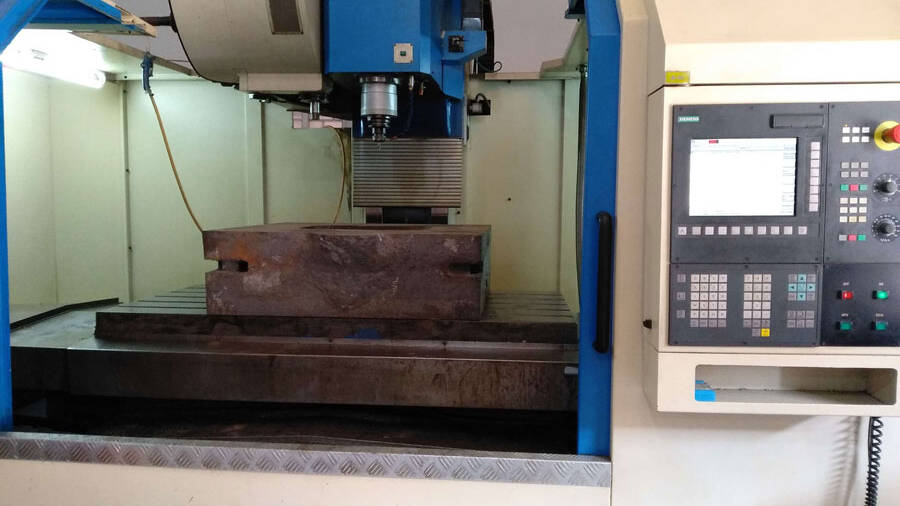
CNC Machining
With rapid growth in the industrial sector, the operating of CNC machines are a compulsion. This machine is run by a computer that also monitors, controls and automates the movement of an industrial machine. At our service centers, the experts are resolved to train you with such modern equipments.

Centerless Grinding Machine
To operate a centerless grinding machine is also a skill which the operator should have a mastery on. It involves holding a workpiece between two grinding wheels which rotate in same direction but different speed and the workpiece has to be manually positioned between the wheels so that the operator must be a professional to achieve adequacy and TEVTA service centers garners such professionals.

Zigzag Machining
Sewing machine that forms a zigzag seam, stitches at an angle to each other on Leather. The seam is attractive and firm, adding value addition to the leather products.

Strobling
Strobel machine single thread chain stitching and two- thread chain stitching adding more value to join two leather pieces as one, usually missing in small SME now strobling facility available on subsidized rates

Strap Cutting
Making strips of leather hides to the desired width for the leather goods. Saving much time with precision to the leather cutting designs which are difficult in manual hand cutting.

Spraying
Set-up to work with any kind of high and low-pressure spraying system (HVLP, AILESS, AIR-MIX etc.), equipped with high capacity circuits and with a device for the automatic loading, discharge and washing of the dying system.

Splitting
The facility is designed to equalize or reduce the thickness of natural or synthetic leather. Through the procedure, removing a part of the material on the flesh side until obtaining the desired thickness & texture.

Skiving
In order to shave, edge & finish different leather strips, skiving is another value addition to leather production. CFC & on hand training on this machine leading to improve leather product quality.

Shaving
To control thickness of leather to the required level by removing leather drenches as a basic raw leather process to turn it a usable & Machine able input.

Sammying Setting
In order to control the moisture content up to desired level, removing the wrinkles of natural leather as a plain patch. This basic process adds on to the value of hides and helping SMEs to furnish more quality production.

Embossing
Embossed leather products are new trends in leather production. Embossing of different logs, monograms & shapes and different prints on leather skins.

Biscuit Ware
The Purpose of Bisque Firing is to transform greenware (unfired bone-dry clay) from its fragile state to a porous and durable state called ceramic for the second stage of firing. The process allows the TEVTA graduates to safely do decorative work, apply Underglazes, and Glazes on the piece without damaging or cracking it.

Kiln Firing Service
As per the traditional understanding, klin firing refers to heating clay at sufficient temperature for the purpose of fusing the particles together. However in the present day, every type of ceramic has its own unique firing temperature and schedule for when to raise or lower the rate of klin. Thus, it is a full fledged technique that cannot be achieved without practice and training which TEVTA service centers are proudly offering.

Casting and Molding
Ceramic mold casting process is a demanding procedure taught at our service centers which deals with combining materials to make a mold having a rubber like consistency. Students are encouraged to explore ideas in relation to the articulation, replication and transformation of objects. Trainees also learn the techniques of mold making with plaster and reproduce unique and inspiring objects.

Green Product
Unlike other materials, ceramic is totally environmentally-friendly. Our future engineers are taught to produce green products to minimize the level of pollution in the environment. In this venture, students enabled to make, design and decorate different products through eco-friendly solutions since ceramic materials does not decompose naturally.

Body/Slip
TEVTA service centers indulge in the dissemination of this unique art of working on slip which is a kind of clay used for decorating, shaping, reduce permeability by water and much more. This slip can be made from the scrap coming from clay body. The students at the institute are taught about the production, quality control parameters, different composition of slip materials.